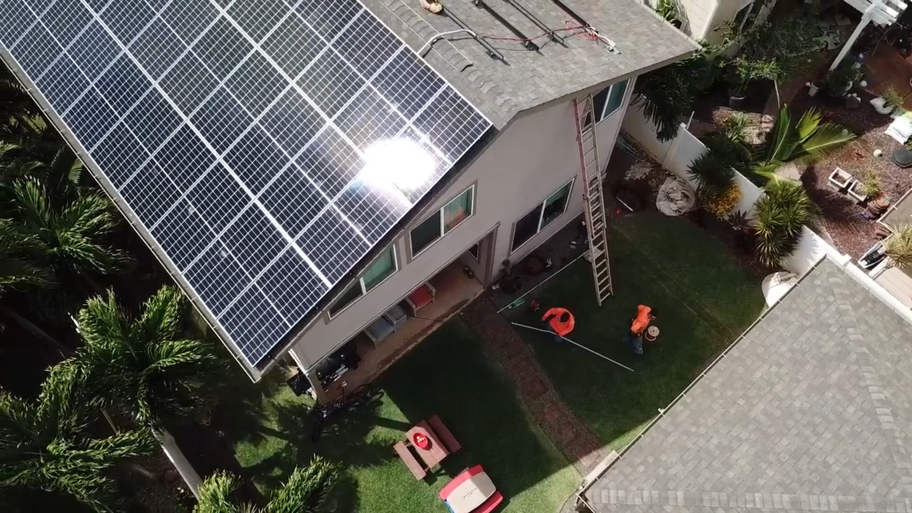
When homeowners consider solar, one of the first questions they ask is:
“What tax credits are available?”
It’s a fair question. Tax incentives can significantly reduce the upfront cost of a solar energy system and improve the overall return on investment. But focusing solely on tax credits can cause homeowners to overlook a more important question:
Would solar still make financial sense without them?
For many Hawaii homeowners, the answer is yes.
Tax credits can reduce the cost of installing a solar system, but they don’t generate the long-term value. That value comes from the electricity the system produces.
Every kilowatt-hour generated by a solar system is a kilowatt-hour that doesn’t need to be purchased from the utility. Over time, those avoided utility purchases can add up to significant savings.
In other words, tax credits may improve the economics, but the electricity production is what creates the economic value.
Solar economics vary depending on where you live.
In areas with low utility rates, solar savings may take longer to offset the initial investment.
Hawaii homeowners face a different reality. Electricity rates in Hawaii are among the highest in the nation, which means every kilowatt-hour produced by a solar system has greater value.
When utility costs are high, generating your own electricity becomes a more attractive long-term financial decision.

Experienced investors often separate incentives from fundamentals.
They ask questions such as:
Solar should be evaluated the same way.
A well-designed solar system should create value through long-term electricity savings. Tax incentives can enhance those returns, but they shouldn’t be the sole reason for making the investment.
Tax credits, rebates, and government programs can change over time.
Programs may be expanded, reduced, or eventually phased out.
The underlying economics of solar, however, remain the same. A solar system continues to generate electricity regardless of changes to incentive programs.
That’s why it’s important to focus on the long-term value of the system rather than the temporary incentives available today.
Tax credits are valuable. They reduce upfront costs and can improve overall returns.
But they are not the reason solar works.
The real value comes from producing electricity and reducing one of the largest recurring household expenses many Hawaii homeowners face.
When evaluating solar, it’s important to remember that tax credits may improve the investment—but they don’t create it.
We use cookies to personalize content and ads, to provide social media features, and to analyze our traffic. We also share information about your use of our site with our social media, advertising, and analytics partners who may combine it with other information that you’ve provided to them or that they’ve collected from your use of their services.
Manage your cookie preferences below:
Essential cookies enable basic functions and are necessary for the proper function of the website.
Google Tag Manager simplifies the management of marketing tags on your website without code changes.
Statistics cookies collect information anonymously. This information helps us understand how visitors use our website.
Google Analytics is a powerful tool that tracks and analyzes website traffic for informed marketing decisions.
Service URL: policies.google.com (opens in a new window)
Vimeo is a video hosting platform for high-quality content, ideal for creators and businesses to showcase their work.
Service URL: vimeo.com (opens in a new window)
You can find more information in our Cookie Policy and Privacy Policy.