Maximize Output: Why You Should Repower (Not Replace) Your Old Solar PV System
If your solar system is pushing 15 years old, chances are it’s still running, just not the way it used to. Panels lose efficiency over time, older inverters can start underperforming, and the technology that seemed impressive back then has been lapped several times over. Meanwhile, your HECO bill keeps coming, and you might be wondering why solar didn’t fix it the way you expected.
There’s a term for what you might need: a Repower. And for a lot of Hawaii homeowners, it’s a smarter move than starting fresh.
So What Is a Repower, Exactly?
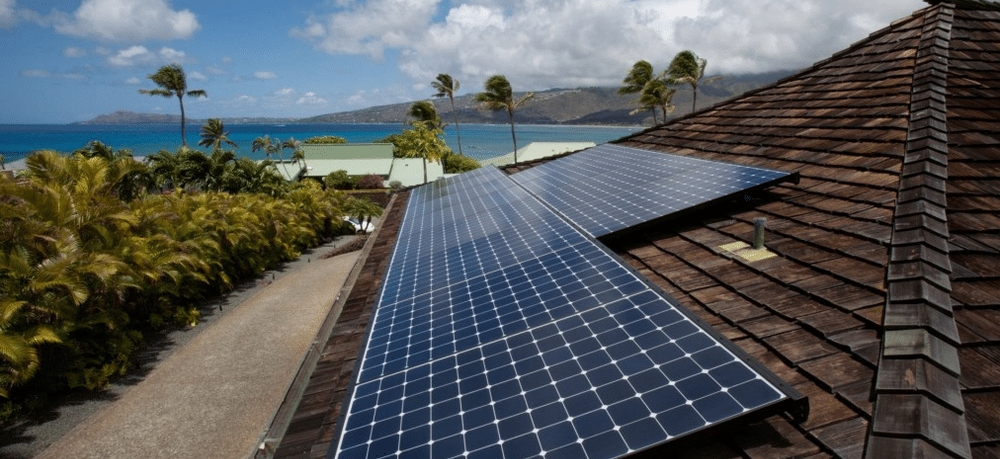
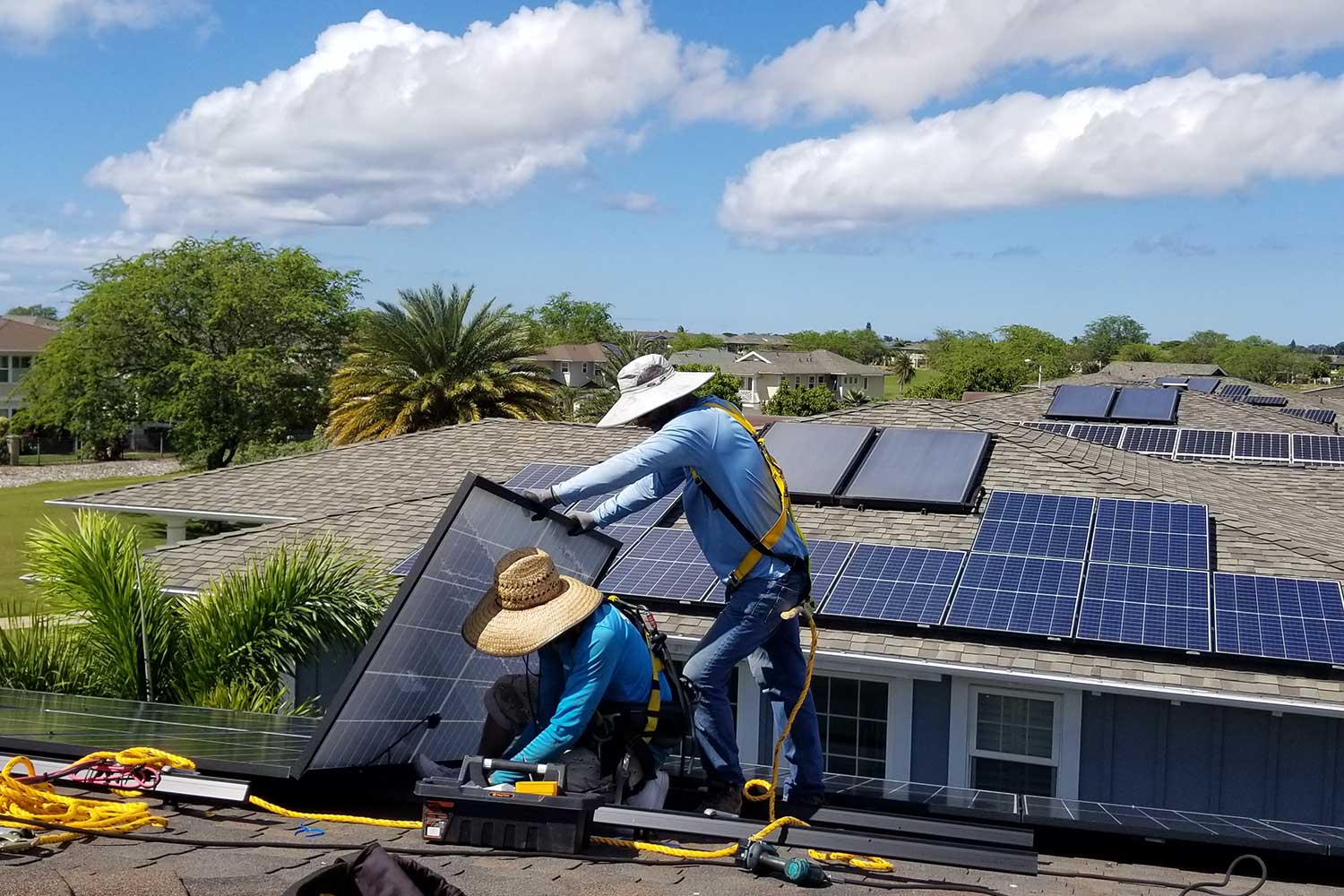
A repower means replacing the older components of your existing solar system, primarily the panels, with newer, higher-efficiency ones. It’s not a full teardown and reinstall. It’s a targeted upgrade that breathes real life back into a system that’s been quietly underperforming on your roof.
One of the biggest cost-savers in a repower is that we can often reuse the rails and mounts already on your roof. That means less labor, no new holes drilled into your roof deck, and a significantly lower overall cost compared to a brand-new installation. The bones of your system stay put. We just upgrade what matters most.
Who Should Be Thinking About This?
Not every older system needs a repower, but if any of these sound familiar, it’s worth a conversation:
You’ve had your system for 15+ years. Panel technology has come a long way. A system installed in the early 2010s is working harder for less output than a modern equivalent would be.

You’re still paying $100 or more a month to HECO. If solar was supposed to reduce your bill dramatically and it hasn’t, that’s a sign your system isn’t carrying its weight. Before assuming you need a whole new system, which costs more, a repower might close that gap at a lower price point and with a better return on your investment.
You’re already planning a roof replacement. If your roof needs work anyway, that’s actually the ideal time to do a repower. We pull the panels for the roofer, and when the new roof goes on, we put up better panels. Pairing these projects together saves time and avoids paying for the same labor twice.
Here’s What You Actually Get Out of It
Beyond just having panels that work better, there are a few things about a repower that might surprise you:
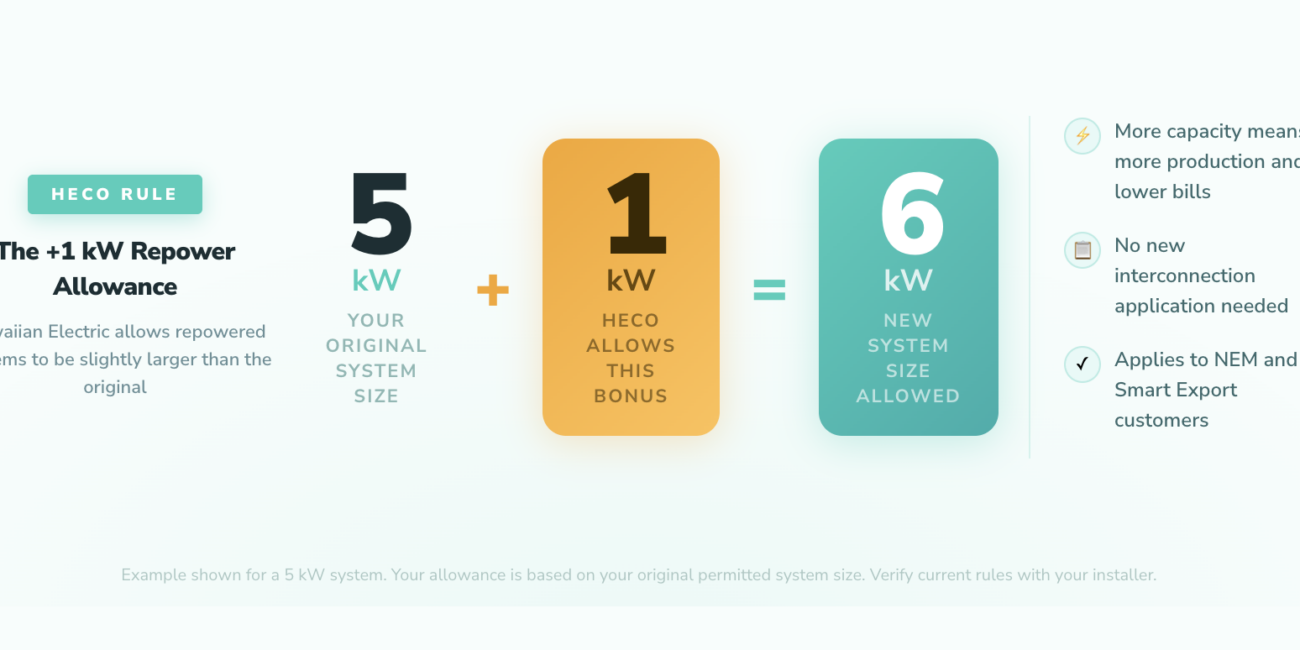
HECO allows your system to be up to 1 kW larger than your original. That’s not a huge jump, but it’s meaningful, and combined with modern panel efficiency, it adds up to noticeably more production.
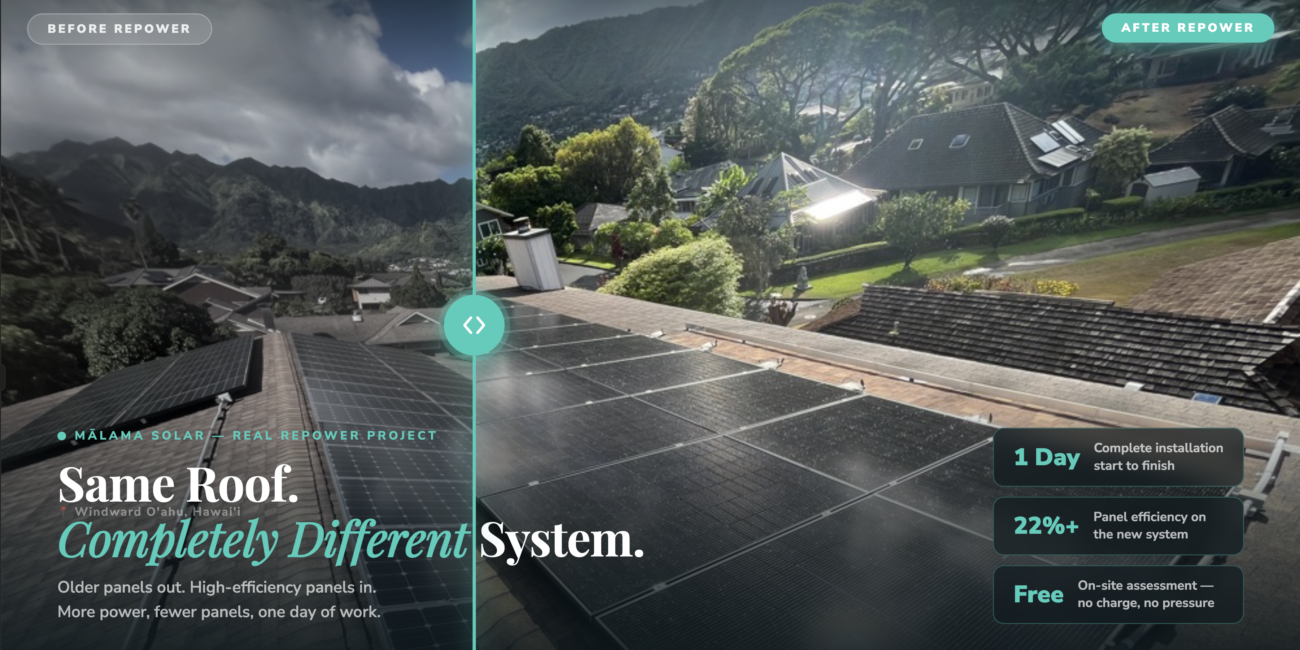
You’ll likely end up with fewer panels. Today’s panels produce significantly more power per square foot than panels from 10–15 years ago. So even though your new system might be slightly larger in total kilowatts, it’ll almost always require fewer physical panels, freeing up roof space and looking cleaner in the process.
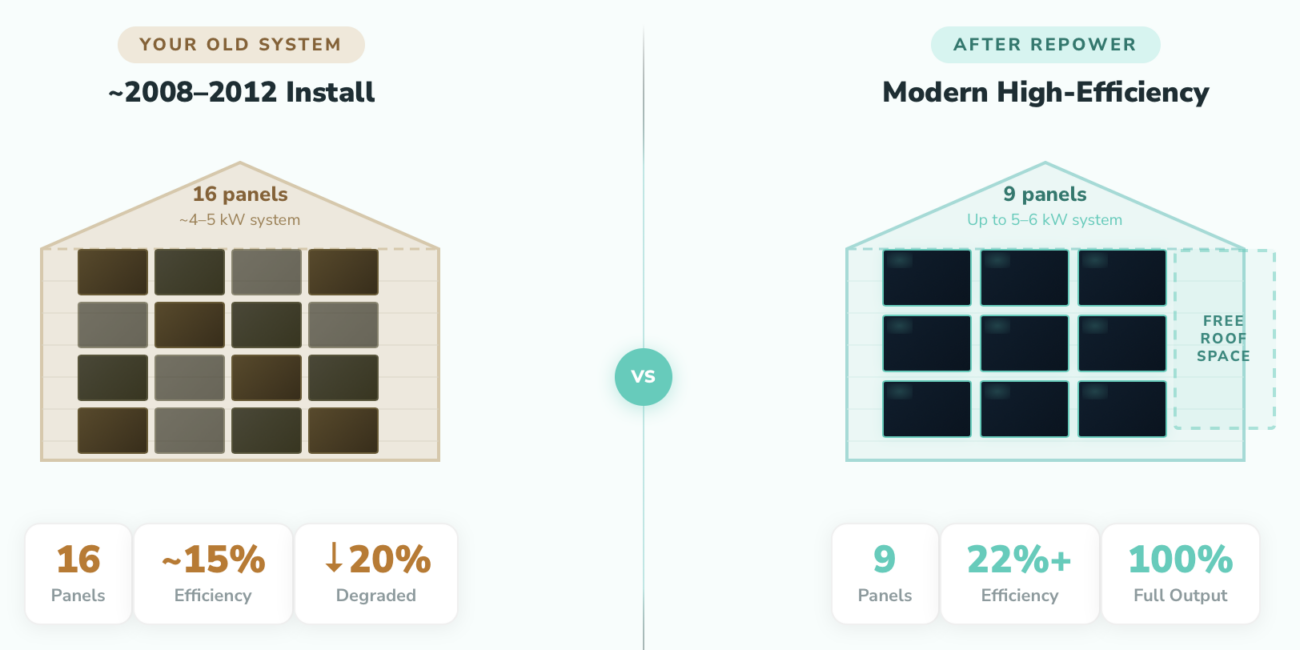
Your system will actually perform like it should. An aging system that’s lost 20–30% of its output potential isn’t a solar system doing its job. After a repower, you’re back to a system producing at full capacity, with modern efficiency built in.
What About Tax Credits?
This is a fair question and worth being upfront about.
The federal solar tax credit is no longer available for residential systems installed after December 31, 2025. That door has closed, so a repower completed now won’t qualify for the federal credit.
The Hawaii state tax credit (RETITC), however, is a different story. Hawaii’s Renewable Energy Technologies Income Tax Credit offers up to 35% of system costs, capped at $5,000 per 5kW, with no expiration date on the horizon. Because a repower involves new equipment installed as part of a qualifying renewable energy system, it should be eligible for the state credit, though we always recommend confirming with a tax professional for your specific situation. That $5,000 state credit can make a meaningful dent in the overall cost of the project.
How Mālama Solar Handles Repowers
We’ve done enough of these to have a pretty clean process.
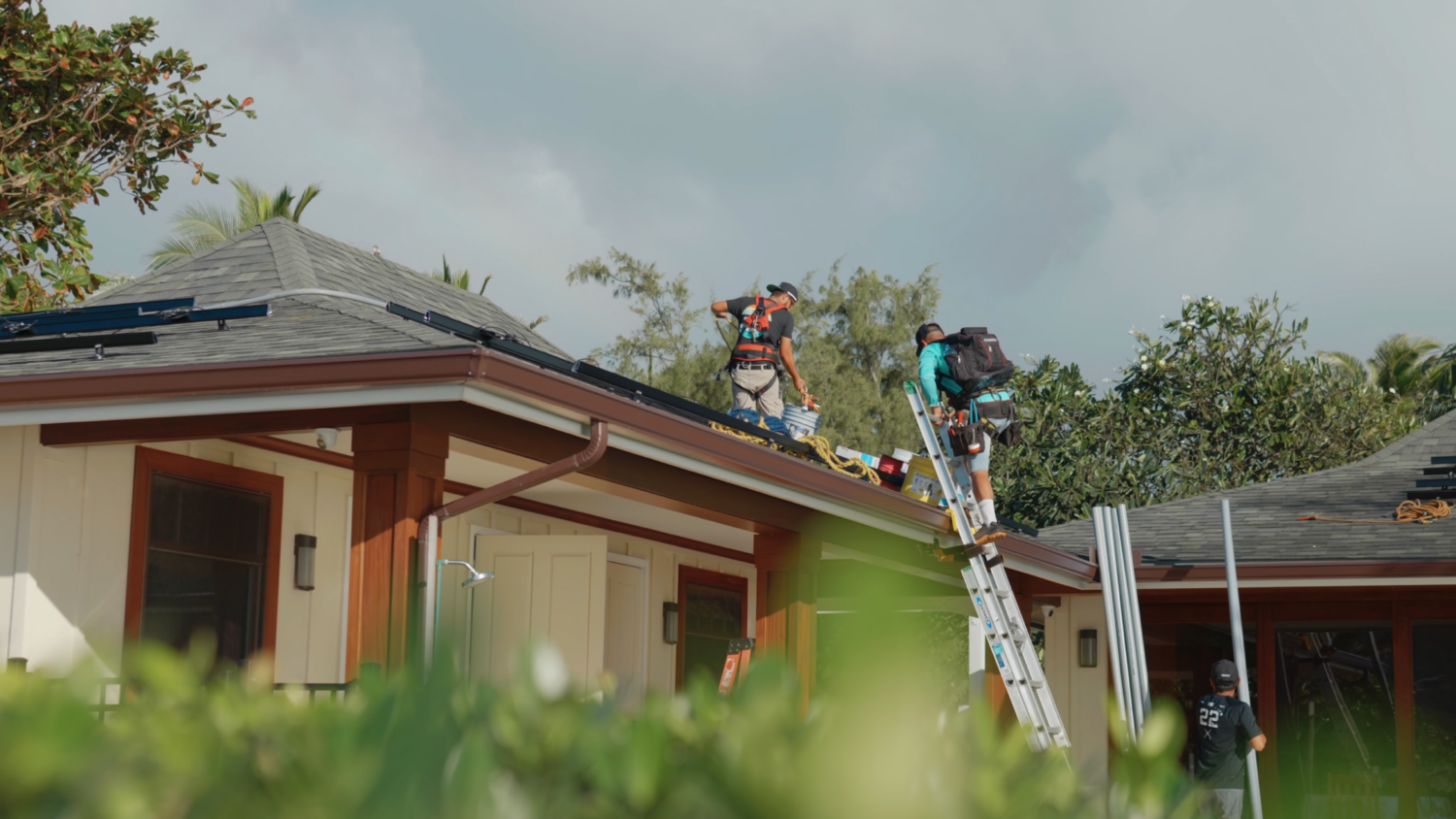
Step one is a free on-site assessment. We send someone out to your home to go up on the roof and inspect your meter to get a real picture of what’s going on. That visit takes anywhere from one to two hours. We’ll look at what’s still working, what needs to go, whether your existing hardware can be reused, and how much production your roof can support. We don’t charge for this. When we’re done, we sit down with you and walk through what we found and what your options are.
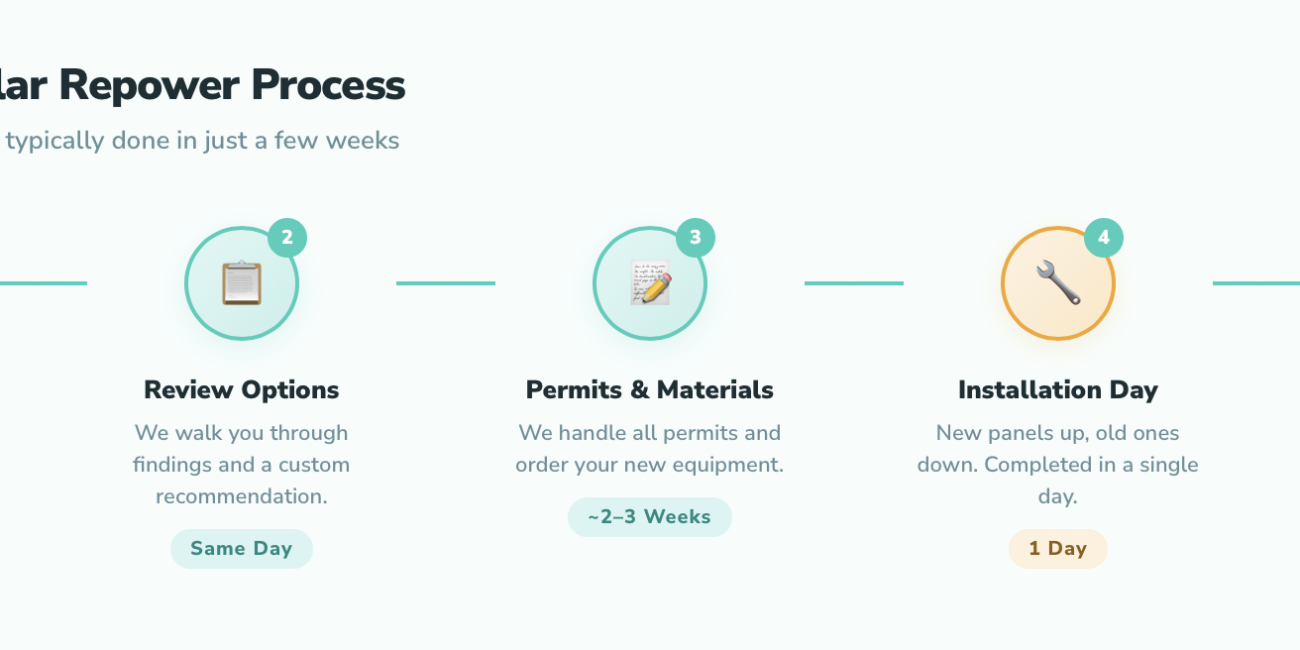
If you want to move forward, the timeline is shorter than most jobs. Repowers typically come together in a few weeks from decision to install. Once we have your materials and permits lined up, the installation itself usually wraps up in a single day. That means you’re not waiting months to start seeing the benefit.
There’s no pressure after the assessment. We show you the numbers, explain what we’d recommend and why, and let you decide.
The Bottom Line
If you’ve had solar for over a decade and you’re still writing a substantial check to HECO every month, don’t assume you need to start from scratch. A repower can cost significantly less than a new system, get done faster, and deliver better results because you’re working with what’s already there.
It’s one of those situations where the smarter financial move and the more efficient move happen to be the same thing.
Curious whether your system is a good candidate?
No sales pitch, just real information about your home and your system.